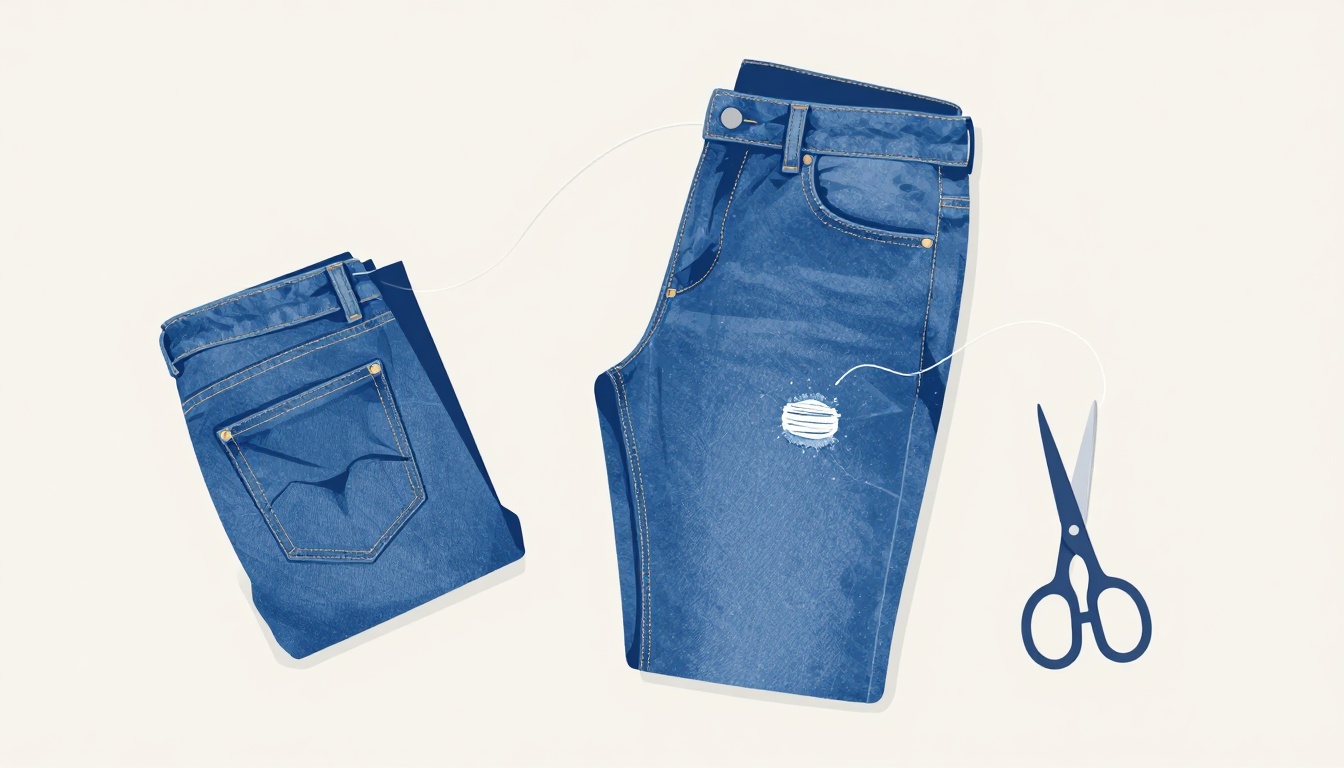
Picture this: You’re slipping into your favorite denim jeans for a casual dinner out. As you check the mirror, a small tear glares back from the knee, about an inch long. Heart sinks, right? Those jeans still fit perfect and match everything.
Tossing them feels wrong, especially when you can patch a small tear in denim jeans by hand. This beats buying new pairs because it saves money, cuts down on textile waste, and adds a custom touch no store can match. Plus, for tears under 2 inches, it’s a quick win with supplies you likely have at home, like thread and scrap fabric.
The result? A durable, nearly invisible fix that looks pro and holds up wash after wash. So, grab your needle, and let’s walk through the easy 6-step method together.
Hunt Down These Simple Supplies for a Rock-Solid Patch
Before you start stitching, round up these essentials. They make patching a small tear in denim jeans by hand straightforward and strong. Most cost under $20 total, and you can grab them from a basic sewing kit, dollar store, or your craft drawer. Here’s what you need, plus why each one counts.
- Scrap denim for the patch: Cut from old jeans; pick fabric slightly heavier than your pair for extra strength. It blends perfectly and withstands wear.
- Strong polyester or nylon thread: Match your jeans’ color. Heavy-duty types like Coats Dual Duty prevent pulls and breaks during tough use.
- Size 4-6 hand needle or denim needle: These pierce thick denim without bending. A sharp point glides through layers easily.
- Sharp scissors: They trim patches clean and precise. Dull ones fray edges and make messy cuts.
- Straight pins: Hold the patch steady before sewing. They keep everything aligned without slipping.
- Thimble: Protects your finger from needle pokes on dense fabric. It lets you push harder safely.
- Beeswax or thread conditioner: Wax your thread to stop tangles and add glide. It boosts durability too.
- Iron: Press seams flat for a pro finish. Heat sets everything neat.
Test thread strength first: Tug a length between your hands. If it snaps easy, swap for tougher stuff. With these supplies to patch jeans by hand ready, your fix lasts years. Now let’s zero in on key picks.
Pick the Perfect Patch Fabric
Start with denim scrap from worn-out jeans. Choose weight a bit heavier than your current pair; it adds backbone without bulk. Cut the piece 1 to 1.5 inches larger than the tear on every side. That overlap secures the mend fully.
Place the patch inside the jeans for an invisible repair. Stitching holds it snug against the tear, so no one spots the fix from outside. Thin cotton won’t cut it; it frays fast and lacks grit. Fusible web offers a no-sew shortcut if you have it, but sewing alone delivers the toughest bond.
Choose Thread and Needles That Won’t Quit
Go for Coats Dual Duty or upholstery thread in polyester or nylon. These handle denim’s pull without snapping. Match the color close; it hides stitches better. Double the thread through your needle for double hold right away.
Grab hand-sewing needles in sizes 4 to 6. They tackle thick layers smoothly. A denim needle works even better if available. Run thread over beeswax after threading; friction drops, tangles vanish. Your stitches stay even and strong as a result.
Prime Your Jeans: Smart Prep Before You Stitch
Smart prep sets up your patch denim tear for patching success. Skip it, and you risk puckered seams or weak holds that fail fast. So, take five minutes to get everything right. Your stitches stay neat and strong as a result.
Turn your jeans inside out first. This positions the tear for an inside patch, so the fix stays hidden. Work on the wrong side; it keeps the right side pristine.
Next, check for dirt. If the area looks grimy, spot-clean with mild soap and water. Rinse well, then air-dry or pat with a towel. Dirty fabric frays more and holds stitches poorly.
Grab your sharp scissors now. Snip away loose threads around the tear. Leave clean, straight edges; they grip better under needle pressure.
Stabilize the spot before sewing. Pinch the tear closed with your fingers, or use a strip of clear tape for a temporary hold. This prevents shifting as you work.
Set up a flat workspace with bright light. A kitchen table works fine; good lighting helps you spot every detail and avoid pricks. Safety matters here, so position your thimble nearby.
Finally, iron the jeans flat. Press the area gently with medium heat, no steam. Flat fabric lies smooth, so your patch bonds tight.
These steps take little time but pay off big. Your hand-patched jeans look factory-fresh and last longer. Ready to stitch?
Patch It Perfectly: Follow These 6 Foolproof Hand-Sewing Steps
Now you have your supplies and prepped jeans. Time to hand sew a patch on denim jeans the right way. This process takes 20-30 minutes if you go steady. Patience pays off here; rush it, and stitches pull uneven. Take breaks if your hands tire. Follow these steps for an invisible, tough mend that lasts.
Step 1: Position the Patch Inside the Tear
Slide your cut patch through the tear from the inside. Center it so edges overlap the rip by at least half an inch all around. Smooth the fabric flat with your fingers; bumps cause weak spots later.
Pin it secure next. Use 4-6 straight pins around the edges. Space them even to hold steady. If shaky hands make you nervous, baste first. Run loose stitches around the border with contrasting thread. You remove them later. This setup keeps everything aligned as you sew.
Step 2: Thread Up and Knot Smart
Cut a 24-inch thread length. Too long tangles easy. Rub it over beeswax for smooth glide and strength. Thread your size 4-6 needle; double it back through the eye for extra hold.
Knot the end away from your work area. Leave a 2-inch tail. Slide the knot between the jeans and patch layers. It hides clean. Tug gently to seat it. Now you’re set to stitch without slips.
Step 3: Start the Ladder Stitch Around the Edges
Pick up the ladder stitch for a hidden hold. It alternates tiny stitches between jeans and patch, like ladder rungs pulling tight. Start 1/8 inch from one edge. Push needle through jeans only, close to the tear (under 1/8 inch bite).
Cross to the patch side. Take a matching tiny stitch there. Pull thread snug but even; tension stays consistent. Repeat back and forth. Imagine drawing a straight line of even rungs.
Visualize the stitch like this: On jeans, enter at point A, exit at B (tiny space). Cross, enter patch at C, exit D. Back to jeans E-F. Each pair forms a rung. Keep bites small for near-invisible results from outside.
Step 4: Work Your Way Fully Around the Patch
Keep the ladder going around the full patch. Move slow; even stitches blend best. Corners need care. Overlap your start by half an inch when you close the loop. This locks everything.
Reinforce corners with 2-3 extra backstitches. Go in and out the same hole twice. It adds grip where wear hits hardest, like knees. Check tension often. Too loose gaps; too tight puckers. Adjust as you go. Your patch sits rock-solid now.
Step 5: Finish Off Threads Securely
End with a double knot between layers. Slide needle under a few stitches on jeans side. Pull up, wrap thread around needle twice. Cinch tight against fabric. Repeat once more.
Trim tails close, under 1/4 inch. They hide easy. Tug the patch firm. Scan for loose spots or gaps. Add extra stitches if needed. Solid finish means no unraveling later.
Step 6: Turn Right Side Out and Press
Flip jeans right side out. Admire your work; the tear vanishes. Lay flat. Dampen a cloth, place over the spot.
Iron with medium heat. Press firm 10-15 seconds per section. Heat melts wax slightly for flat hold. No steam direct; it spots denim. Cool fully. Your patched jeans look new, ready for wear.
Make It Last: Top Tips and Fixes for Patch Perfection
You’ve followed the steps, and your patch denim tear looks solid. However, tips for patching denim tears help it endure daily wear. These tweaks boost strength and style. They prevent common slip-ups too. For example, reinforce high-stress spots like knees with extra backstitches. Always wash jeans inside out after patching; it protects threads from agitator pulls. Upcycle more scraps next time; it cuts waste and saves cash.
Most importantly, spot mistakes early. Too-loose stitches gap under strain, so re-sew tighter. Wrong thread color stands out, but match it in sunlight for true shade. Big knots bulge; hide them between layers instead. For rips over 3 inches, call a pro. They handle heavy reinforcement better.
Here are seven quick fixes to perfect your mend:
- Check tension often: Pull snug, not tight. Even pull keeps fabric flat.
- Use tiny stitches: Bite under 1/8 inch. They vanish from outside.
- Double-stitch edges: Go around twice on wear zones for grip.
- Press after sewing: Medium heat flattens seams without shine.
- Fade new patches: Soak in tea for worn look if colors clash.
- Test the tug: Yank gently post-sew. Fix weak spots right away.
- Store flat: Avoid folds over the patch to prevent creases.
Try these next time you spot a tear. Your jeans stay tough and timeless.
Blend Your Patch So No One Notices
Keep stitches small and even for stealth. Take bites no bigger than 1/8 inch on both layers. This ladder pulls tight without dimples. Tension matters most; snug holds firm, but overtight puckers denim. Test by running a finger over it. Smooth means right.
After sewing, press flat. Place a damp cloth over the spot. Iron medium heat for 10 seconds. It sets threads deep. If your patch looks too fresh, fade it. Brew strong black tea, cool it, then soak the area 30 minutes. Rinse light, air-dry. The tannins soften new dye to match old. No one spots the fix now. As a result, your jeans look worn-in natural.
Switch to Visible Patches for Cool Style
Want flair? Skip hidden mends for visible patches. Use sashiko stitches on the outside. This Japanese running stitch adds artful lines. Pick contrasting thread, like white on blue denim. It turns repairs into bold design.
Thread a contrast color double. Space even running stitches 1/4 inch apart over the tear. Cross lines for patterns, like waves or grids. Pin the patch outside first. Sew simple whip stitches to secure, then overlay sashiko. Press final. You get durability plus street style. Jeans gain personality that way. Switch it up; your next patch could steal the show.
Conclusion
You now hold the best way to patch a small tear in denim jeans by hand. This quick fix takes 20-30 minutes with cheap supplies. It delivers a strong, invisible mend that lasts wash after wash.
That inch-long knee tear from your favorite pair? Gone for good. In addition, you save cash and cut waste. Most importantly, your jeans look sharp again.
Try it on your next rip today. Share photos of your patched jeans in the comments. Sign up for our newsletter for mending shirts or jackets next. Your favorite jeans have new life, and you gained a skill.