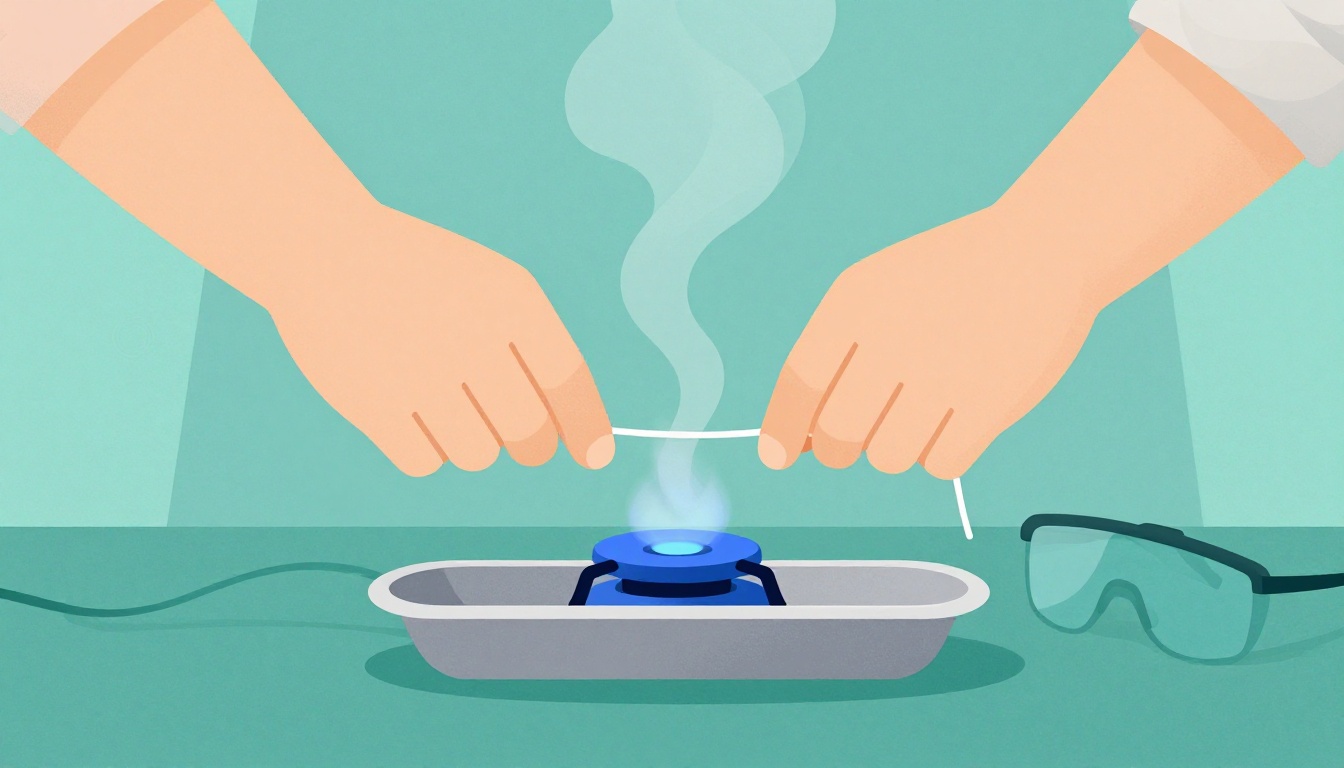
You’ve grabbed a skein of yarn at a garage sale or thrift shop. The label’s gone, and now your project might flop because you don’t know if it’s wool or acrylic. That frustration ends today.
A yarn burn test lets you identify fiber content fast. You burn a tiny snippet and watch the flame, smell, and ash. It reveals secrets labels hide. This method saves cash on wrong buys and helps you match yarns for perfect stitches.
You’ll master safety rules first. Then follow simple steps to test any yarn. Compare results to common fibers, and fix common errors. By the end, you’ll spot cotton from synthetics in seconds. Ready to play yarn detective? Start with safety to keep things risk-free.
Safety First: Essential Precautions for Your Burn Test
Fire demands respect, even for a quick test. One slip could spark trouble, so set up right. You build trust in the method when you prioritize caution.
Pick a fire-safe spot. Use a metal sink or go outdoors on concrete. Keep flammables far away, like curtains or paper stacks.
Grab tweezers or forceps to hold the yarn. Your fingers stay safe from heat. Have water nearby, or a damp cloth, plus a small extinguisher just in case.
Ventilation matters too. Open windows or work outside. Fumes from synthetics can irritate eyes or lungs. Wear gloves if your skin’s sensitive.
Test only a 1-inch snippet. Never burn big pieces. Keep kids and pets out of sight.
Here’s a quick safety checklist:
- Fire-safe surface ready.
- Tweezers in hand.
- Water or extinguisher close.
- Good airflow.
- Tiny sample only.
- No distractions.
Adults supervise if others watch. These steps take seconds but prevent mishaps. Now you test with confidence.
Step-by-Step: How to Perform the Yarn Burn Test at Home
Practice builds skill, so start with yarns you know. Grab cotton or acrylic scraps first. This way, you recognize patterns quick.
Follow these steps in order:
- Snip a 1-inch sample from a hidden spot, like the yarn’s end. Avoid your project’s main area.
- Twist fibers loose or untwist them. Expose pure strands for true results.
- Clamp the sample with tweezers. Hold it over your safe surface.
- Light a match or lighter from below. Let the flame catch the tip.
- Watch closely. Note flame color, burn speed, smoke, odor, and ash. Blow out if needed, but observe first.
- Let ash cool. Touch it gently. Compare notes to fiber guides.
Video the burn on your phone. Replay helps spot details you miss. Repeat twice for sure results.
In seconds, you gain confidence. No fancy tools required. Just careful eyes and nose.
Observe the Flame and Speed
Flame tells much. Cotton shows a steady yellow flame, like paper. It burns even and quick.
Synthetics flare bright and fast. Acrylic might sputter hot. Wool curls away or self-extinguishes.
Burn speed varies too. Plant fibers go fast, almost whoosh. Animal fibers resist and smolder slow. Synthetics melt before full burn.
Steady flame means natural often. Flickering or melting signals fake fibers. Note shape too. Steady cone for cotton; drippy for poly.
Sniff the Smell Clues
Odor gives big hints. Don’t lean too close, but catch the scent.
Natural plant fibers smell like burning paper or leaves. Cotton and linen share that clean, sharp note.
Animal fibers waft burning hair or feathers. Wool’s strong, like a bad barber shop. Silk’s milder, still protein-like.
Synthetics stink chemical. Acrylic reeks of hot plastic. Polyester turns sweet, almost candy-like when melting. Nylon hints celery or fish.
Smells fade fast, so sniff right away. Fresh nose works best after coffee or mints.
Check the Ash Left Behind
Ash seals the deal. Wait till cool, then poke.
Cotton leaves soft gray ash. Crush it; it powders like dust.
Wool forms dark, brittle clumps. They crunch but break easy.
Synthetics bead up hard. Acrylic melts to black sticky balls. Polyester globes shiny and tough.
Touch test matters. Powdery ash points natural. Beads scream synthetic. Crush gently; feel the texture.
Decode Your Results: Burn Traits of Common Yarn Fibers
Results match fibers quick with practice. Blends mix traits, so note all clues. Use this guide as your cheat sheet.
| Fiber Type | Flame | Smell | Ash | Burn Speed |
|---|---|---|---|---|
| Cotton | Steady yellow | Burning paper | Soft gray, powdery | Fast |
| Linen | Yellow, steady | Burning leaves | Soft gray, powdery | Very fast |
| Rayon | Quick orange | Burning paper | Tiny dark flecks | Fast |
| Wool | Sputters, blue edge | Burning hair | Dark brittle clumps | Slow, smolders |
| Silk | Steady, weak | Burning hair (mild) | Fine black powder | Slow |
| Acrylic | Hot, bright | Chemical plastic | Black melting beads | Fast melt |
| Polyester | Self-extinguishes | Sweet plastic | Hard shiny globules | Melts quick |
| Nylon | Blue, steady | Celery/fish | Hard tan beads | Melts slow |
This table sums key signs. Refer back during tests. Naturals ash soft; synthetics bead.
Plant-Based Fibers: Cotton, Linen, and Rayon
Cotton burns clean. Yellow flame dances steady. Paper smell rises sharp. Ash grays soft and crumbles to dust.
Linen acts similar. Flame stays yellow but speeds faster. Leaves scent stronger, earthy. Ash matches cotton’s powder.
Rayon mimics plants but burns quicker. Orange flame flashes. Paper odor lingers. Ash leaves tiny dark bits, not full gray.
These share fast burns. They help breathable summer knits.
Animal Fibers: Wool and Silk
Wool fights fire. Flame sputters with blue tips. Hair smell hits strong. Ash darkens brittle; it crushes crunchy.
Silk burns weaker. Steady flame, less drama. Mild hair scent. Fine black powder results.
Both smolder slow. Warmth and bounce define them. Perfect for cozy winter gear.
Synthetic Champs: Acrylic, Polyester, and Nylon
Acrylic flares hot. Bright flame melts fast. Plastic stench overwhelms. Black beads stick tough.
Polyester quits early. It self-extinguishes. Sweet melt smell. Shiny globules form hard.
Nylon burns blue and steady. Celery note odd but clear. Tan beads harden.
Synthetics stretch well and dry fast. They rule easy-care projects.
Smart Tips and Fixes for Reliable Yarn Testing
Dirty yarn fools tests. Wash samples first in mild soap. Rinse well; dry fully.
Blends confuse most. Test several spots. Mixed ash or smells mean combo fibers.
Rare yarns vary, like bamboo acts like rayon. Cross-check with touch: wool felts, synthetics slip.
Build your cheat sheet. Note tests in a notebook or app. Combine with rub test: silk warms hand.
Labels win for pricey yarn. Burn confirms doubts only.
Experiment safe. History note: mills used burn tests since 1800s for quality control. Now you join pros.
Master Yarn Mysteries with Burn Tests Today
Burn tests spot fibers quick and cheap. You save projects and cash now. Safety first lets you test worry-free.
Try it on scrap yarn this week. Share your results or odd smells in comments below. For heirloom pieces, send to labs instead.
What yarn stumped you before? Arm yourself; conquer label gaps. Your next project thrives.