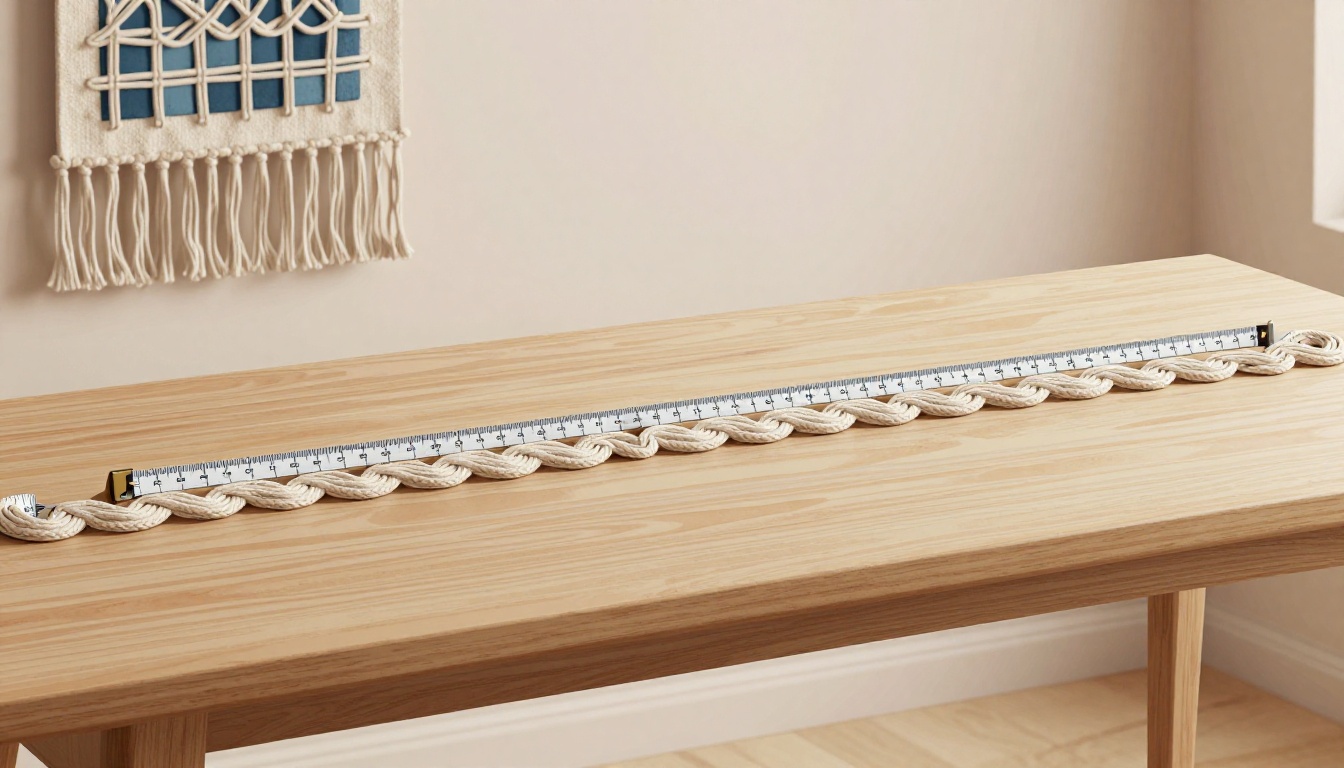
You’ve started a macramé wall hanging, knots flying along, but then you run out of cord two inches from the finish. Frustrating, right? Or worse, you buy way too much and waste cash on unused rolls.
Calculating the right cord length fixes that mess. It saves time, money, and headaches. You avoid restarts or sloppy shortcuts. This post breaks it down simply. We cover why knots gobble cord, key factors like project size and knot style, a foolproof formula, real examples for popular makes, and pro hacks to dodge pitfalls.
By the end, you’ll nail lengths for any project. Even if you’re new to macramé, these steps make it easy. Grab your sketchbook. Let’s get your cords cut right the first time.
Why Knots and Twists Eat Up More Cord Than You Expect
Knots shrink your cord fast. Picture twisting a jump rope. It shortens before your eyes. Macramé works the same way. Each knot or twist pulls cord into loops. That means less straight length for the finished piece.
Common knots like square knots or half hitches eat the most. Ignore this, and your project ends uneven. You might restart sections. Or add mismatched cord. Always plan for that shrinkage upfront.
Fringe and hanging ends add more needs. They dangle free but still count in totals. Smart crafters measure twice. They cut once with extras built in.
Common Knots and Their Cord Multipliers
Square knots need about four times the finished height. Each one stacks loops high. Spirals use three times because they twist tight. Berry knots demand five times. They puff out round.
Half hitches fall around 3.5 times. These rules give working length. That’s the cut amount before knotting. Beginners should start low. Add 10% buffer if unsure.
For example, a 10-inch knotted section in square knots requires 40 inches cut. Test small bits first. You’ll see the drop clearly.
Factoring in Fringe, Headers, and Tails
Add 6 to 12 inches per cord for fringe. It sways at the bottom. Headers wrap the top dowel. Plan 4 to 8 inches extra there.
Tails hang loose sometimes. Count them too. Say your piece finishes at 24 inches tall. Add 8 inches fringe per end. That bumps each cord to 40 inches minimum before knots.
Hoops or branches need wrap extras. Measure the curve. Double it for safety. These additions prevent bare spots.
Main Factors That Determine Your Total Cord Amount
Project size sets the base. Bigger means more cord. Shape matters too. Curves in hangers use extra.
Cord count multiplies everything. Thick cords cover fast but knot bulkier. Thin ones need more strands for fill.
Knot density packs tight or loose. Complex patterns spike usage. Skip these checks, and you guess wrong. Always list them out.
Use this quick checklist. Jot your project’s details. Then plug in numbers.
Project Size and Number of Cords
Measure height at the tallest point. Width at the widest. Cords span that space.
For a 20-inch wide hanger, use 8 cords. Each works 2.5 inches apart. Height times cords gives rough total.
A 30-inch tall piece with 10 cords starts big. Factor curves next. They add 20% often.
Knot Style and Pattern Density
Loose patterns use 3x multipliers. Tight chevrons hit 5x or more. Scan your diagram. Count dense spots.
Alternating knots save cord. All one type wastes it. For example, a berry knot row doubles needs there. Adjust per section.
Step-by-Step Math to Calculate Exact Cord Length
Start with this formula: (finished height x multiplier) + fringe + waste. Waste is 10% for cuts and errors.
Multipliers vary by type. Use the table below for quick picks.
| Project Type | Multiplier | Example Use |
|---|---|---|
| Wall Hanging | 4x | Square knots heavy |
| Plant Hanger | 5x | Curves and loops |
| Bookmark | 3x | Simple twists |
| Bag Handle | 4.5x | Dense braids |
This covers most makes. Round up always. Fill in your numbers now.
Measure Your Design First
Sketch on graph paper. Note height, width, cord count. Use a soft tape measure.
Mark knot zones. Count cords per section. A ruler works for flat plans.
Apply the Multiplier and Add Extras
Take height 24 inches. Multiply by 4 for square knots: 96 inches. Add 12 inches fringe: 108 inches per cord.
Times 8 cords: 864 inches total. That’s 72 feet. Add 10% waste: about 80 feet. Tweak for thick cord plus one multiplier.
Real Calculations for Popular Macramé Makes
Apply the math to favorites. Adjust sizes as needed. Costs assume $0.10 per foot cotton cord.
A 24-inch wall hanging uses 8 cords at 100 inches each. Total 67 feet. About $7.
Plant hangers taper. They need more at top. Bookmarks stay small and simple.
Wall Hanging Breakdown
20 by 30 inches. Square knots dominate. Multiplier 4x on 30 height: 120 inches base.
Fringe 10 inches: 130 per cord. 10 cords total 108 feet. Waste bumps to 120 feet, $12.
Even spacing keeps it balanced.
Plant Hanger Example
36-inch drop. 12 cords for 8-inch pot. Curves add 1x: 5x multiplier on 36 equals 180 inches.
Loops at top take 20 extra. Fringe 12: 212 inches each. Total 212 feet, $21. Test the taper.
Avoid These Cord Length Pitfalls and Pro Hacks
Forget waste, and you scramble mid-make. Thick cord fools thin math. It knots shorter.
Buy 20% extra always. Recycle scraps for tests. Free calculators online speed it up.
Confidence grows with practice. You got this.
Test with a Sample First
Cut one cord short. Knot a 6-inch sample. Measure used length. Scale up.
Mini versions reveal tricks. Adjust formula from real results.
Perfect lengths make pro macramé simple. Master the formula above. Key tips include multipliers, fringe adds, and 10% waste.
Grab cord now. Start that wall hanging or hanger. Share your project pics in comments. What will you make first? Subscribe for more craft math that sticks. Your next piece hangs flawless.